
Some SEOs spend mornings digging through Ahrefs exports. Others keep spreadsheets with four hundred publisher contacts that haven’t replied in six months. Both approaches work. They just take different amounts of time.
A link building marketplace skips the waiting period. You open a dashboard. You type what you need. You see sites accepting money for backlinks right now. You pick the ones that fit. You pay. The link goes live.
This piece covers five platforms doing exactly that. Each approaches the backlink marketplace concept differently. Some let you search competitor backlink profiles and buy from the same domains. Others focus on speed or human support. All show you pricing and metrics before you commit cash.
Here are the platforms worth testing in 2026.
1. INSERT.LINK
Best for: Page-level targeting and insertion speed
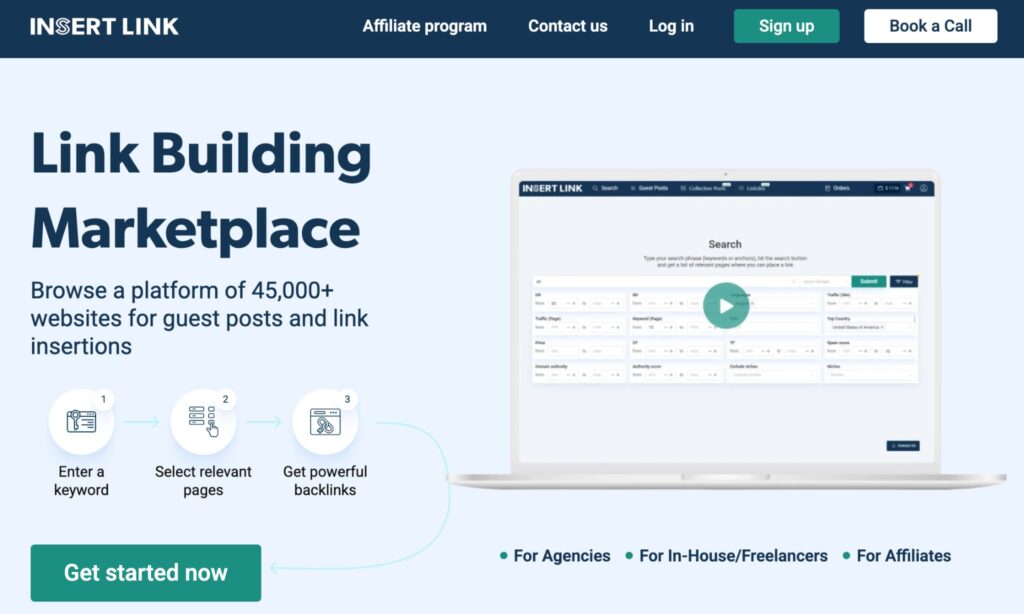
INSERT.LINK operates as a backlink marketplace platform built around page discovery rather than domain lists. Drop a keyword into their search bar, and the system crawls millions of articles. It returns a list of published pages actively accepting new links. You see Domain Rating, referring domains, and traffic estimates before you spend anything.
The database holds 45,000+ websites across thirty geos. NLP-based search groups publishers by content context rather than just categories. Niches run deep—SaaS, finance, health, legal, crypto, gaming, e-learning. You’re not guessing whether a site fits your topic.
Pricing varies by publisher. Lower authority insertions start around $10. Guest posts begin near $40. A DR45 site with steady traffic typically runs $80 to $170. Turnaround averages two to three days for insertions. Three to seven for guest posts.
The “links first, pay later” option matters. You review placements before funds leave your account. If a publisher doesn’t deliver, you don’t pay.
Third-party numbers check out. Trustpilot shows 4.3. DesignRush and G2 both average 4.8. Users consistently mention the platform saves research time and support responds fast. For agencies, white-label reporting and team management come built in.
INSERT.LINK fits teams that want to pick exact pages rather than trusting someone else to choose.
2. Linkhouse
Best for: Competitor gap analysis in one place
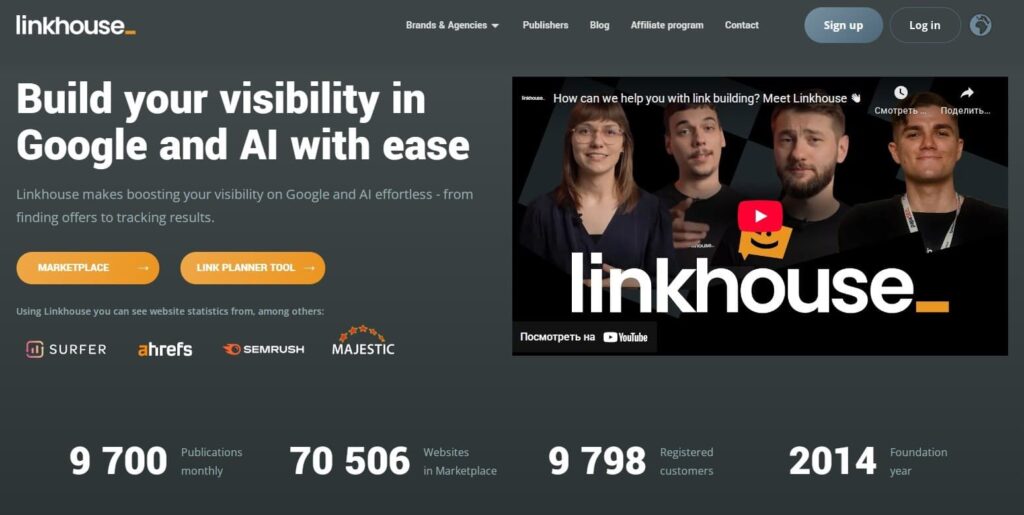
Linkhouse built their Backlink Gap Tool specifically for SEOs tired of exporting competitor domains and cross-referencing against marketplace inventory. You enter your domain and a keyword. The tool pulls competitor data from Ahrefs, Semrush, and Google simultaneously. It shows you every portal where competitors have backlinks that are available for purchase through their platform.
The marketplace has operated since 2014. It holds 75,000+ domains across twenty-five languages. European coverage stands out—German, French, Spanish, and Italian markets have strong selections. Each listing shows key metrics so you know what you’re buying.
Pricing starts around $9.99 for basic placements. Copywriting runs from $29. Higher authority domains scale up based on metrics. You filter by competitor count, domain authority, and relevancy to focus on domains linking to multiple competitors.
The gap analysis and marketplace exist in the same system. You don’t export lists and hope inventory matches. You see available domains during the competitor scan.
For data-driven teams wanting full competitor profile analysis without manual research, Linkhouse removes steps.
3. PressWhizz
Best for: Speed and competitor keyword discovery
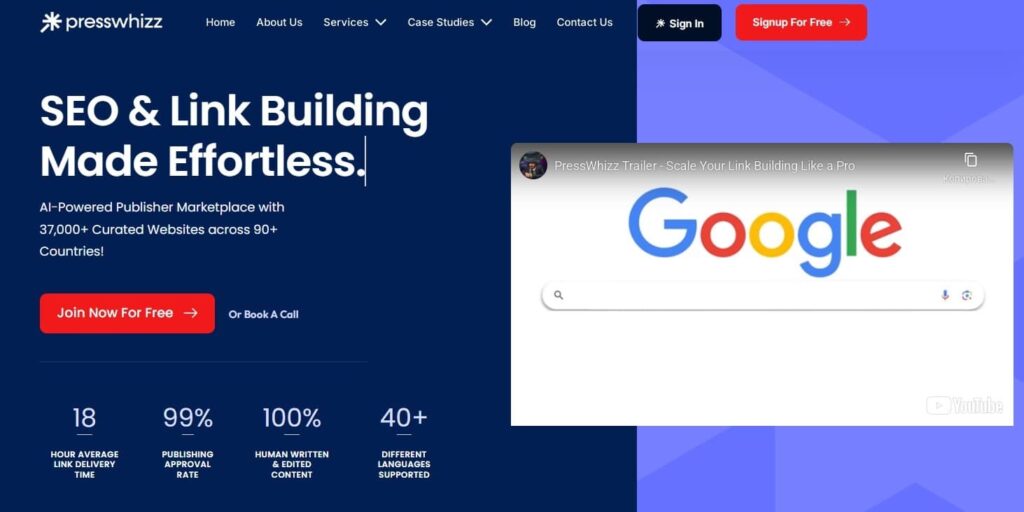
PressWhizz moves fast. Eighteen hours is their average link delivery time. Ninety-nine percent publishing approval rate. Those numbers change campaign planning.
The marketplace holds 37,000+ curated sites across ninety countries. Forty-plus languages supported. Average price per link runs $131.61. A search for UK domains with DR40+ shows opportunities around $80.
Their competitor research tool works differently. You search competitor brand terms instead of comparing full backlink profiles. Type a competitor name. The platform returns every site mentioning them. You see domain authority, organic traffic, spam score, and the exact page where your competitor appears. You can then build a niche edit on that same page or target a different page on the same site.
At checkout, you can add tiered signals like social shares and tier two backlinks to amplify authority. Pricing is one-time per link. No subscriptions. No recurring fees. They accept crypto.
Every publisher gets vetted before listing. You see full URL previews before purchase. Links come with a twelve-month replacement guarantee.
For buyers who need to see exact page context before purchasing, PressWhizz delivers.
4. MeUp
Best for: Agencies managing multiple client competitor sets
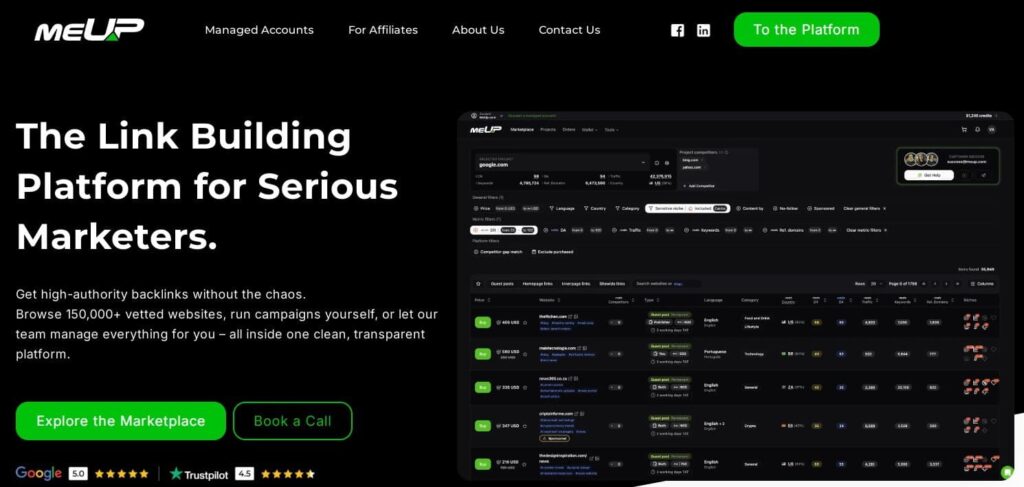
MeUp launched in 2023 and has processed 150,000+ placements. Their Competitor Link Gap Tool lets you create projects for each website you manage. Enter your domain. Add competitor domains. The tool runs a full backlink scan comparing their profiles against MeUp’s marketplace inventory. The scan takes about five minutes.
Once complete, a filter shows every marketplace link that has a backlink to your competitors. You see exactly what you’re missing without manual cross-referencing.
Every publisher shows detailed metrics. Organic traffic. Traffic trends. Semrush Authority Score. Traffic share by country. European coverage is particularly strong, though US and UK markets are well represented.
Copywriting starts from $25. You can filter and find relevant placements under $200. The payment model removes risk. You don’t pay until the link goes live. Publishers deliver first. You inspect the work. Then payment releases.
For agencies managing multiple clients, the project-based tracking matters. Each client gets their own competitor set and gap analysis. You maintain separation without creating new spreadsheets every time.
5. Bazoom
Best for: Human support plus marketplace access
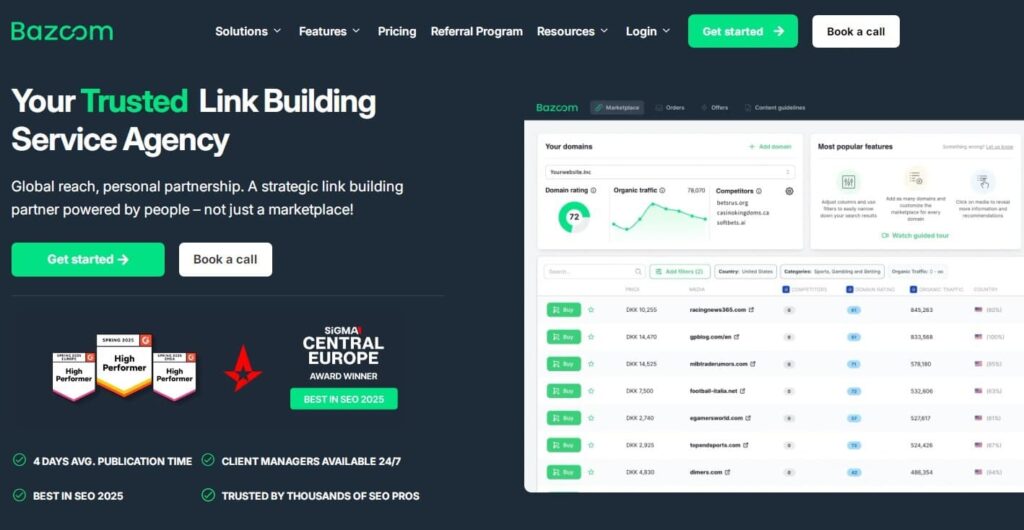
Bazoom positions itself as an extension of your team rather than just a link catalog. The difference shows in the details. A dedicated client manager checks in regularly. Support runs 24/7 with over eighty people available. Someone picks up the phone when you call.
Their AI scans your site and suggests specific pages to target. The marketplace pulls metrics from Ahrefs, Moz, and Semrush simultaneously. You filter by the same numbers you already trust. The difference is Bazoom vets publishers upfront so you’re not guessing which sites are legitimate.
The platform covers everything in one price. Content writing. Publication. Management. No line items for extras. Average publication time runs four days.
Thousands of SEO professionals use them. The “people-powered” angle isn’t just marketing. It’s baked into how they deliver. For SEO pros who want guidance, this matters. You’re not alone with a dashboard and a prayer. Someone can build a full strategy if you’re stretched thin.
Wrapping Up: Which One Best Matches Your Style
Different campaigns need different approaches.
If you want to target specific pages your competitors rank from, INSERT.LINK gives you page-level search. You find the exact content driving their traffic and add your link nearby.
If you want a full backlink profile comparison with purchase built in, Linkhouse shows you every competitor domain available in their marketplace. The analysis and acquisition happen in one place.
If speed drives your decisions, PressWhizz delivers links in hours rather than days. Their competitor keyword search shows you exactly where rivals appear.
If you manage multiple clients, MeUp lets you maintain separate competitor sets. Each project gets its own gap analysis without cross-contamination.
If you want someone to talk to when things get complicated, Bazoom provides human support at scale. You get a dashboard plus a person who knows your account.
Run a small test with one of them. Three to five links. See how the process actually feels with your money on the line. Some platforms will click with your workflow. Others won’t. The only way to know is to try.